
Why Traditional Claypots Matter for Claypot Turtle Soup in Singapore
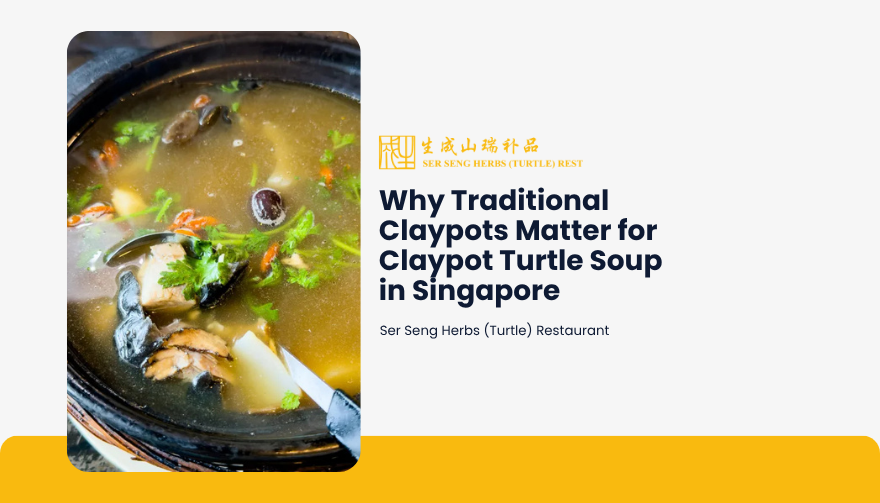
Singapore diners are familiar with the comfort of a steaming bowl of turtle soup, but how it is prepared and served can also shape the dining experience. Claypot turtle soup is prepared in a traditional pot that retains heat well, keeping the broth warm at the table while the fragrance of its herbs remains noticeable. From low-heat simmering to serving, the cookware forms part of the experience rather than simply holding the food.
Why are Claypots Used for Herbal Soups?
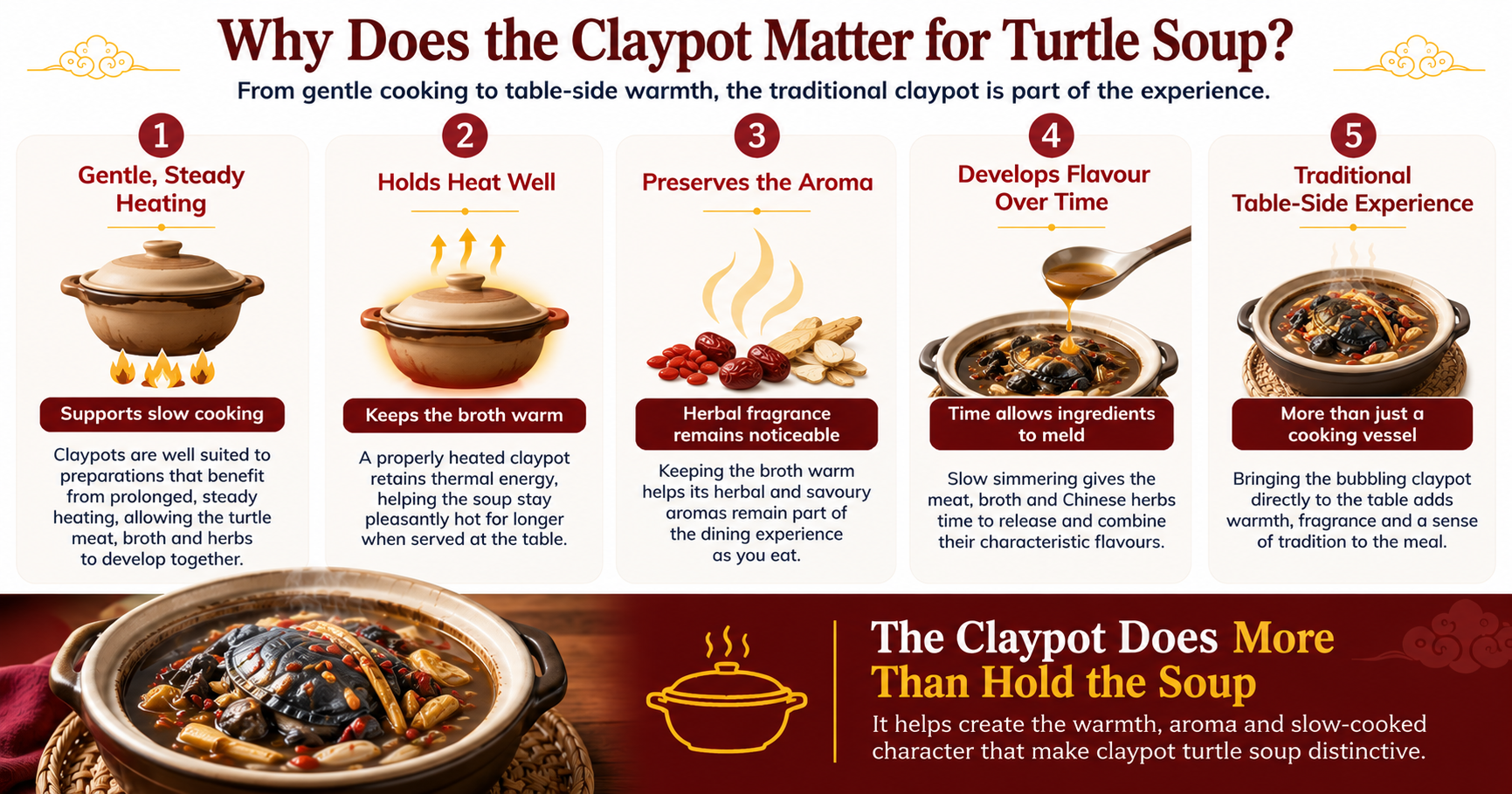
Claypots are used for herbal soups because they retain and distribute heat, making them well suited to preparations that benefit from gentle, prolonged slow cooking.
Clay is a relatively poor conductor of heat compared with many metals. Once heated, however, a thick clay pot can stay warm for an extended period. This makes it useful for meals that benefit from a steady cooking environment, particularly in Chinese cuisine, where slow preparation is often used for soups and other traditional recipes.
For this delicacy, low heat allows the meat, broth and Chinese herbs to develop together through gradual heating, without sudden temperature changes. The slow cooking process gives the ingredients time to meld, creating a harmonious result with greater richness.
Turtle soup is one of the traditional preparations where the serving method can contribute to the overall culinary experience. The same pot can move from the kitchen to the table, reducing the need to transfer the finished broth into another container.
How Does Cooking Turtle Meat in Claypots Affect the Dish?
Cooking turtle meat in claypots allows it to simmer gently over a steady heat, giving the meat sufficient time to become tender while the herbs and broth develop together.
When cooking the meat, allowing sufficient time is important for achieving tenderness. The cooking process involves steady heating that allows the meat, herbs and liquid to come together without relying on aggressive temperatures.
As the broth stews, ingredients release their characteristic notes into the liquid. The herbs gradually blend with the meat and stock, producing a flavourful and balanced result. The steady conditions also allow heat to circulate through the preparation rather than causing sudden temperature changes.
This careful process can also help prevent the meat from becoming overly chewy. Meticulous preparation, suitable heat and sufficient time all contribute to the final texture, helping the meat remain tender and juicy rather than dry.
How Does Porous Material Affect the Flavour Profile?
Porous clay does not directly add flavour to the broth, but its cooking properties can help create conditions that allow the ingredients to develop their natural flavour profiles.
The porous nature of traditional unglazed clay is associated with moisture management and gentle heating. When used appropriately, these properties can support the steady cooking conditions needed for the meat, broth and Chinese herbs to develop together.
A stable cooking environment gives the ingredients time to release their characteristic flavours and aromas into the broth. The herbs can gradually meld with the stock and meat, helping to create a distinctive taste. This is also why claypot turtle soup tastes different from other herbal soups.
The effect depends on the cookware’s construction. Its thickness, material and whether it is glazed can influence how it responds to heat. The clay itself should therefore not be treated as a source of flavour; its role is to support the cooking process that allows the ingredients to develop their natural character.
Does a Claypot Keep the Broth Hotter for Longer?
Yes, a properly heated claypot can help the broth stay hot at the table for longer than a thin serving bowl.
A heated pot holds a significant amount of thermal energy after preparation. When the steaming broth reaches the table, the container continues to release heat as the contents cool, providing a lingering sense of warmth throughout the meal.
This is useful for a hearty meal that may be enjoyed slowly. Diners can take their time without the broth becoming cold as quickly.
The effect depends on factors such as the vessel’s thickness, the broth’s starting temperature, portion size, and the surrounding environment. A claypot does not stop the broth from cooling, but its ability to hold heat can slow the loss of temperature after serving.
How Does Serving Temperature Affect Flavour and Aroma?
Serving temperature affects flavour and aroma because heat helps the broth’s aromatic character remain noticeable as you eat.
As the liquid cools, its fragrance generally becomes less pronounced. A heated serving container slows heat loss, allowing the scent of the Chinese herbs and savoury broth to remain part of the dining experience.
This is especially relevant when several fragrant ingredients are used. Their earthy and herbal notes can be easier to appreciate while the broth remains hot.
Temperature also complements the meal’s texture. Tender meat, a rich broth and fragrant herbs come together naturally while the contents remain comfortably hot. The result is a more satisfying culinary experience, where aroma, texture and flavour can be appreciated together.
Are Claypots Better Than Modern Metal Cookware?
Claypots are not universally better than modern metal cookware, but they are well suited to meals where steady heating and extended table-side serving are valued.
| Traditional claypot | Modern metal cookware |
|---|---|
| Holds heat well | Heats up quickly |
| Supports gentle preparation | Responds quickly to temperature changes |
| Stays hot at the table | Can cool more quickly once removed from heat |
| Suits slow-simmered soups | Convenient for faster preparation |
| Adds to traditional presentation | Offers practical and versatile use |
Modern cookware is often more efficient when precise temperature control and speed are priorities. It can also make preparation more convenient in a busy kitchen.
Traditional pots, however, combine heat retention, gentle preparation and presentation. These qualities make them well suited to liquid broths and other meals designed for slow cooking.
The better option ultimately depends on the method used and the qualities desired from the finished meal.
Why Does the Serving Vessel Matter to the Dining Experience?
The serving vessel matters because it helps maintain temperature while adding fragrance, presentation and a sense of tradition to the meal.
Bringing a bubbling pot to the table creates an immediate sensory experience. The steam, heat and herbal scent are noticeable before the first spoonful.
It also gives diners more time to enjoy the meal without the contents becoming cold too quickly. The container therefore serves both a practical and culinary purpose.
For a traditional dish such as turtle soup, the cookware becomes part of the experience rather than simply acting as a holder. For many diners, this combination of traditional preparation and table-side presentation can turn a familiar meal into a small culinary adventure.
Where Can You Try Authentic Claypot Turtle Soup in Singapore?
You can try authentic claypot turtle soup in Singapore at Ser Seng Herbs (Turtle) Restaurant at Tai Thong Crescent, where it is served in the traditional style.
Claypot turtle soup is about more than keeping a dish hot. The traditional pot supports gentle simmering and helps maintain the temperature of a slow-cooked broth, allowing its fragrance and flavours to remain part of the experience.
The cookware does not make the herbs more medically potent. Its ability to hold heat makes it particularly suited to this style of preparation. A warm bowl can also provide the kind of comfort many diners seek from a traditional, nourishing meal.
For diners seeking an authentic claypot turtle soup in Singapore, the traditional serving method is therefore more than presentation. It brings together texture, fragrance and savoury character at the table while offering a distinctive way to enjoy this hearty delicacy.

Other Entries
Health Benefits of Eating Turtle Soup
Since the dawn of Chinese cooking, turtle soups have been perceived as a luxurious delicacy that contains Read More
Unique Fitness Food That Will Turn You into a Health Buff
Would you consider yourself as a health buff? Or are you working your way towards becoming one? Keeping Read More
How Exactly Does a Turtle Soup Taste?
Everyone has their favourite dishes. It can be a savoury plate of fried chicken, or a serving of steamed Read More
