
The Science Behind Claypot Turtle Soup: Heat, Time, and Flavour
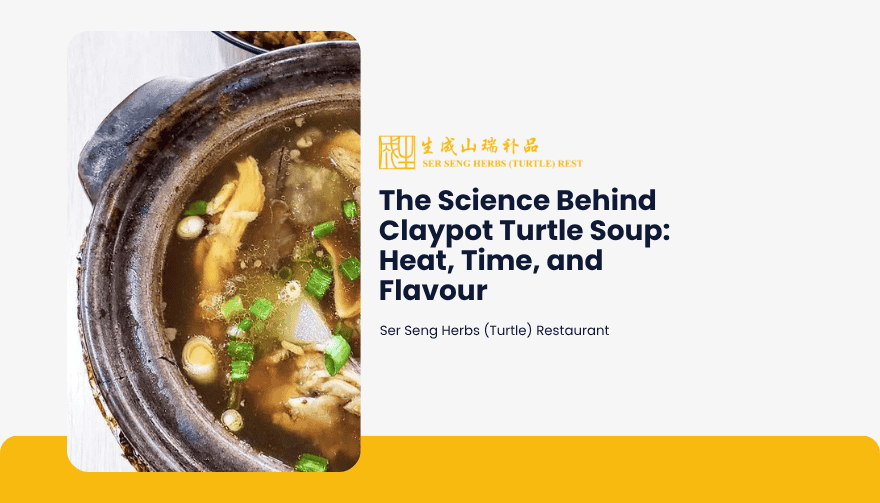
Claypot turtle soup is more than just a comforting meal; it’s a culinary technique that brings science and tradition together. Unlike soups cooked in conventional cookware, claypot cooking relies on the material itself to control heat, moisture, and flavour.
Understanding how heat, time, and the claypot itself interact explains why each bowl is uniquely satisfying. Each spoonful is the result of slow cooking, careful herb selection, and precise temperature control, all of which are difficult to replicate with modern pots or pans.
Why Claypots Matter in Traditional Cooking
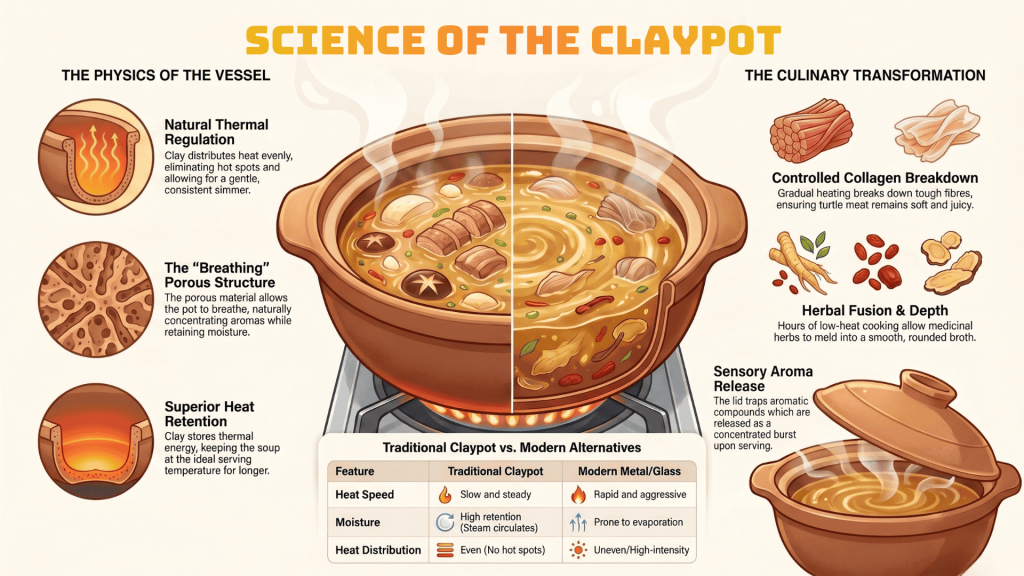
Claypots are more than just cooking vessels. They actively shape how a soup develops. Made from natural clay, they heat up slowly and distribute heat evenly, allowing turtle soup to simmer gently rather than boil aggressively.
Traditional Chinese cooking highly values this slow and controlled heat. Claypots retain heat long after cooks remove them from the stove, keeping the soup consistently hot and comforting from the first spoonful to the last.
Another key characteristic of claypots is their porous structure. This allows the pot to “breathe” as the soup cooks, gently concentrating aromas while reducing the risk of overcooking. Over time, this process creates a depth of flavour that is difficult to replicate using modern cookware.
How Heat Shapes the Broth
Slow, steady heat defines claypot cooking, rather than high flames. This gentle approach allows the broth to deepen in flavour without becoming cloudy or harsh. For turtle meat, patience is essential; gradual heating helps preserve its texture while giving the soup time to develop a rich, well-balanced base.
The science behind the heat includes:
- Even heat distribution
Claypot allows heat to spread evenly, reducing hot spots. - Residual heat cooking
The clay continues cooking gently after the heat is lowered. - Moisture retention
Steam circulates within the pot, keeping the meat tender.
The Role of Time and Heat in Cooking Turtle Meat
Time and temperature work hand in hand in claypot turtle soup. Instead of rapid boiling, the consumer is gently simmered over low heat for hours. This controlled approach allows flavours to develop gradually while protecting the natural texture of the turtle meat.
- Tender and juicy meat: Slow heat gradually breaks down collagen, keeping the turtle meat soft without drying it out.
- A richer broth: Flavours and nutrients are slowly released, creating a deep, hearty base.
- Balanced flavour profile: Herbal ingredients like ginger, garlic, mushrooms, and Chinese herbs have time to meld, resulting in a smooth, rounded flavour rather than sharp notes.
This method highlights the natural taste of the turtle while allowing the broth to take centre stage as both nourishing and flavourful.
Aroma, Steam, and the Sensory Experience
One of the most striking qualities of claypot turtle soup is how it engages the senses even before the first sip. As the soup simmers, gentle steam rises from the claypot, carrying with it layers of herbal aroma.
Claypots help manage this process naturally. They trap aromatic compounds as the soup cooks, then release them slowly when the lid is lifted. This creates an immediate burst of fragrance that signals depth and richness.
Beyond aroma, the claypot also preserves warmth exceptionally well. The soup stays hot in the bowl, allowing flavours to remain consistent from start to finish. As the heat lingers, the slow-cooked broth reveals subtle nuances from the turtle meat and herbs that might otherwise be lost.
Together, the aroma, rising steam, and lasting warmth transform claypot turtle soup into a full sensory experience, one that feels comforting, immersive, and deeply satisfying rather than just nourishing.
Why Authentic Claypot Turtle Soup Is Hard to Replicate
Designers create modern cookware for speed and efficiency, but it lacks the natural qualities of a claypot. Materials like metal and glass heat up quickly, yet they cannot replicate the claypot’s ability to retain heat throughout the cooking process.
This is why authentic claypot turtle soup remains closely tied to specialised restaurants and experienced chefs.
Experience Claypot Turtle Soup in Singapore
At Ser Seng Herbs (Turtle) Restaurant, located at Tai Thong Crescent, claypot turtle soup is still prepared with meticulous attention to detail. The establishment preserves tradition while delivering consistency in texture, flavour, and aroma. Every bowl reflects slow cooking, fresh ingredients, and a harmonious blend of Chinese herbs, offering a comforting and healthful dining experience.
The claypot turtle soup here is not just a dish, it’s a demonstration of patience, precision, and flavour mastered over generations.

Other Entries
Health Benefits of Eating Turtle Soup
Since the dawn of Chinese cooking, turtle soups have been perceived as a luxurious delicacy that contains Read More
Unique Fitness Food That Will Turn You into a Health Buff
Would you consider yourself as a health buff? Or are you working your way towards becoming one? Keeping Read More
How Exactly Does a Turtle Soup Taste?
Everyone has their favourite dishes. It can be a savoury plate of fried chicken, or a serving of steamed Read More
