
Singapore Turtle Soup: The Herbs and Ingredients Behind This Traditional Delicacy
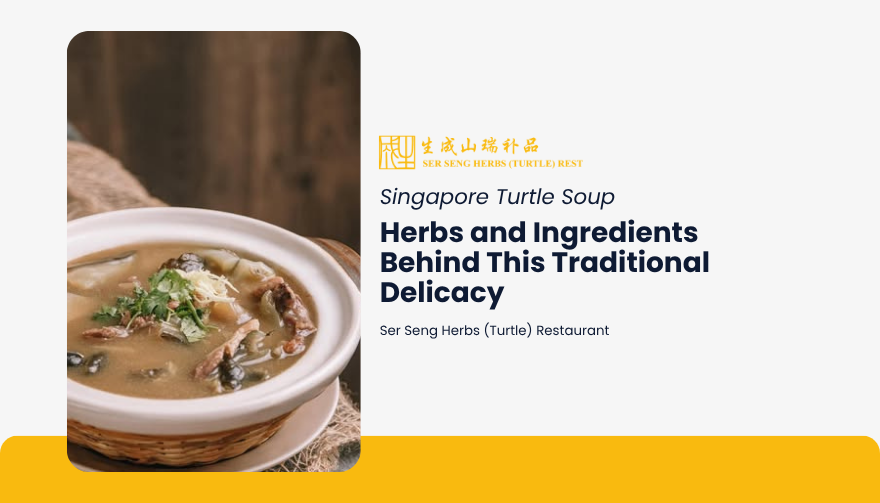
A good pot of Singapore turtle soup is more than just meat simmered in water. When it arrives at the table, the first thing you may notice is the aroma: warm, earthy and fragrant, with a deep savoury character rising from the broth. Beneath the surface, tender pieces of meat, Chinese herbs, and aromatic additions cook slowly together.
Traditional recipes can vary, but the time and care that go into the pot help bring everything together. Turtle meat provides the main source of protein, while additions such as ginseng, goji berries, and red dates contribute their own aromas, subtle sweetness, and nutritional value. Each plays a part in shaping the finished bowl.
So, what exactly goes into a steaming bowl of turtle soup?
Turtle soup comes together through carefully selected additions, slow cooking and patience. From the meat at its heart to the traditional Chinese herbs that give the broth its distinctive character, every element contributes to the final dish.
Turtle Meat: The Heart of the Soup
Naturally, turtle meat is the main component. It provides the meaty character that sets turtle soup apart from other Chinese soups.
When prepared properly, the meat softens and becomes tender after prolonged cooking. It has a distinctive texture different from more familiar proteins such as chicken or pork, which is part of the appeal for people trying turtle for the first time.
From a nutritional perspective, turtle meat is a source of protein, which the body needs to maintain and repair tissues. The meat and connective tissues can also contain collagen, a structural protein found naturally in connective tissue, skin and other parts of the body.
This does not mean that eating collagen-rich foods automatically produces specific health or cosmetic effects. However, collagen is one of the nutritional characteristics that makes turtle meat interesting from a food perspective.
The meat also adds depth as it cooks, giving the soup a heartier character.
Which Traditional Chinese Herbs Go Into Turtle Soup?
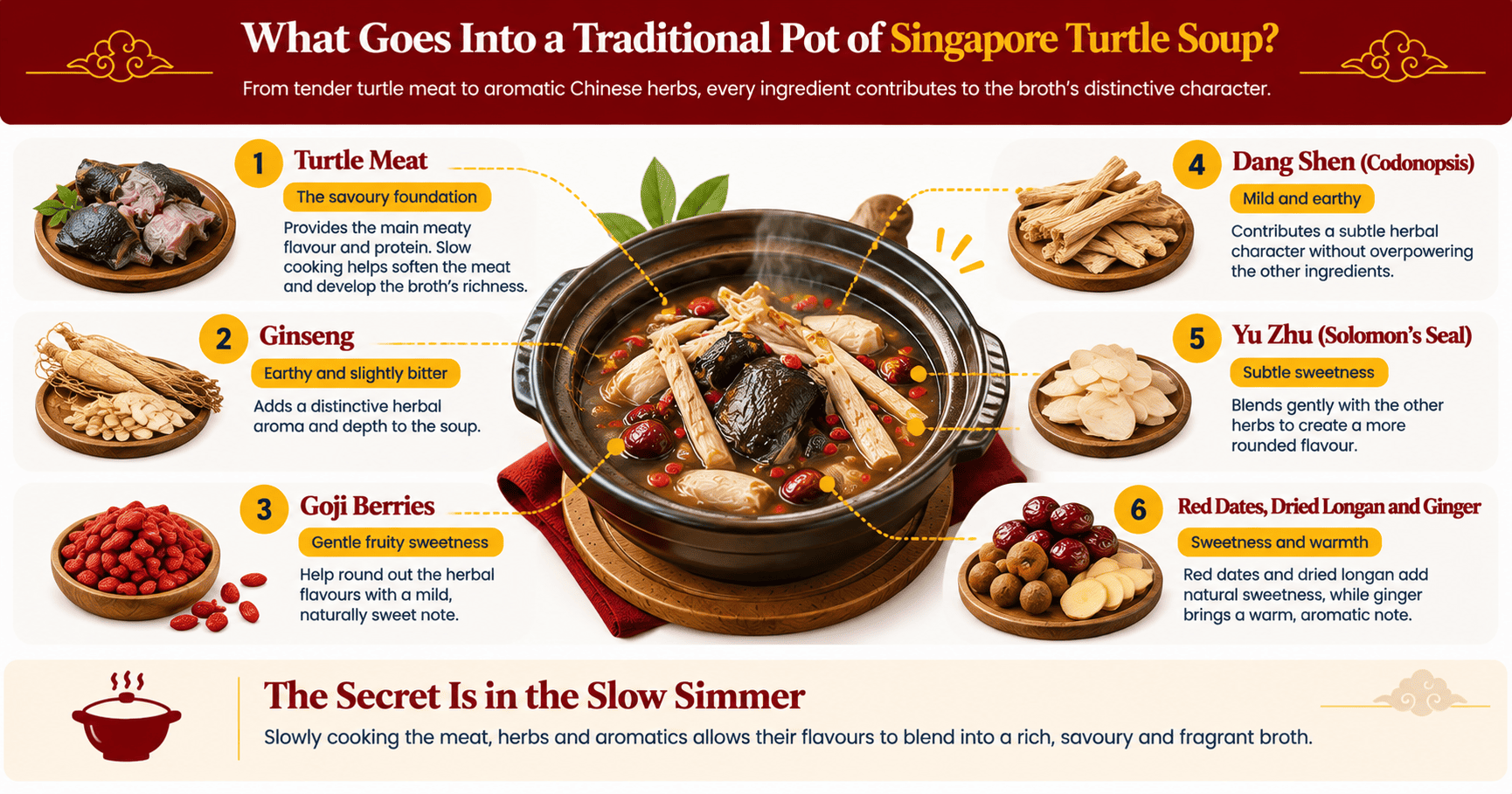
The ingredients and herbs used in turtle soup give the dish much of its distinctive character. They can add earthy, sweet, fragrant, or slightly bitter notes, creating a broth that tastes more layered than a simple meat stock.
The exact combination varies by recipe, but several ingredients are commonly associated with Chinese herbal soups.
Ginseng
Ginseng has an earthy, slightly bitter taste. In traditional Chinese food culture, people often use it in soups and herbal preparations for its distinctive character.
Nutritionally, ginseng contains naturally occurring plant compounds called ginsenosides. These compounds are one reason ginseng has attracted interest in nutritional and scientific research.
In a soup, however, ginseng also has a practical culinary role. Its stronger flavour can add depth to the herbal broth, particularly when balanced with sweeter elements.
Goji Berries
Goji berries bring a gentle sweetness and mild fruity note to the pot. Their gentle sweetness can help soften some of the stronger earthy or bitter notes from other herbs.
They also contain nutrients and naturally occurring plant compounds, including carotenoids and other antioxidants.
In turtle soup, they contribute more than nutrition; they help create a more rounded flavour.
Dang Shen
Dang Shen, also known as codonopsis root, is commonly used in traditional Chinese soup-making and other preparations.
It has a mild, earthy flavour rather than the pronounced bitterness associated with some stronger additions. This makes it suitable for soups where its subtle character complements rather than overpowers the main ingredient.
Dang Shen has a long history of use in traditional food and Chinese medicine. View its traditional medicinal associations as part of that tradition, not as proven medical benefits.
Yu Zhu
Yu Zhu, or Solomon’s seal rhizome, has a relatively mild taste with a subtle sweetness. It is often used in Chinese soups because it can blend easily with other ingredients without dominating the broth.
Its understated character makes it useful in a complex herbal soup. Rather than standing out on its own, it helps balance the overall concoction.
Like other traditional herbs, Yu Zhu has been used in Chinese herbal practices for generations. In food, it also adds flavour, aroma, and character to a slow-cooked soup.
Red Dates
Red dates are one of the sweeter ingredients commonly used in Chinese soups. They provide natural sweetness, helping to balance the earthy flavours of herbs and the savouriness of the meat.
They also provide carbohydrates and small amounts of various vitamins and minerals.
In turtle soup, red dates can round out the broth without making it overly sweet. This is especially useful when using several stronger herbs.
Dried Longan
Dried longan contributes another layer of sweetness and fragrance. Its concentrated flavour works well in soups that are cooked slowly, allowing its sweetness to gradually become part of the broth.
Nutritionally, dried longan provides carbohydrates and small amounts of minerals, although the amount consumed in a bowl of soup is relatively small.
Its main role here is culinary. Together with red dates, it can soften the sharper notes of certain herbs and give the soup a more fragrant finish.
What Other Ingredients Build the Flavour?
The Chinese herbal blend gives turtle soup much of its distinctive character, but supporting aromatics also matter.
Ginger, for example, adds warmth and a fresh, aromatic quality. It can help balance the richness of the meat while adding another layer of flavour to the broth.
Garlic and other aromatics may also be used depending on the preparation. These add savouriness and fragrance, helping the herbs and meat come together rather than tasting like separate components.
The result should feel balanced rather than like a collection of competing notes. When the ingredients are well balanced, they work together to create a broth that is fragrant, savoury and naturally rich.
Why Does Turtle Soup Take Several Hours to Prepare?
Turtle soup takes several hours to prepare because the meat, herbs, and other components need time to cook slowly and develop their flavours. The long hours of gentle cooking also help soften the turtle meat and bring the different key components together into a deeper, more balanced broth.
As it boils, the herbs gradually release their aroma and flavour into the broth. This slow process also lets the savoury, herbal, and naturally sweet notes blend together.
Rather than tasting like individual elements, the finished broth develops a more cohesive flavour. That patience is an important part of the dish, and it is one reason a well-made bowl reflects the time and dedication that goes into it.
What Should a Good Bowl of Turtle Soup Taste Like?
A well-prepared bowl should have depth without allowing any single note to dominate. The broth may be rich and aromatic, with a savoury flavour from the meat and aromatics, balanced by the natural sweetness of red dates and dried longan. The aroma should be noticeable without being overwhelming.
The turtle meat should be tender, while the broth carries the flavours of the herbs that have simmered together.
This balance is what makes the soup tasty rather than simply strong. It also helps explain why turtle soup appeals to diners who enjoy slow-cooked dishes with distinctive flavours and textures.
Some diners may compare it with familiar soups such as black chicken soup, another Chinese soup that can be prepared with herbs and slow cooking. But turtle soup has its own character, largely because of the meat, connective tissues and combination of herbs used in the preparation.
Where Can You Try Traditional Turtle Soup in Singapore?
If you want to try an authentic turtle soup in Singapore, Ser Seng Herbs (Turtle) Restaurant is a place to consider. The restaurant prepares its turtle soup with tender turtle meat, Chinese herbs and a fragrant herbal broth, bringing together the traditional flavours that define this local delicacy.
The delicious soup is served hot in a claypot, keeping the broth warm while its aroma rises from the table. Pair it with yam rice for a hearty meal that complements the rich, savoury soup.
Turtle soup remains a renowned part of Singapore’s food scene, and enjoying it at the table is a simple way to appreciate the care that goes into the pot.
Looking for the best turtle soup in Singapore? Visit Ser Seng Herbs (Turtle) Restaurant for a steaming bowl of traditional turtle soup and experience this distinctive local favourite for yourself.

Other Entries
Health Benefits of Eating Turtle Soup
Since the dawn of Chinese cooking, turtle soups have been perceived as a luxurious delicacy that contains Read More
Unique Fitness Food That Will Turn You into a Health Buff
Would you consider yourself as a health buff? Or are you working your way towards becoming one? Keeping Read More
How Exactly Does a Turtle Soup Taste?
Everyone has their favourite dishes. It can be a savoury plate of fried chicken, or a serving of steamed Read More
