
Best Turtle Soup in Singapore: A Complete Guide to This Traditional Delicacy
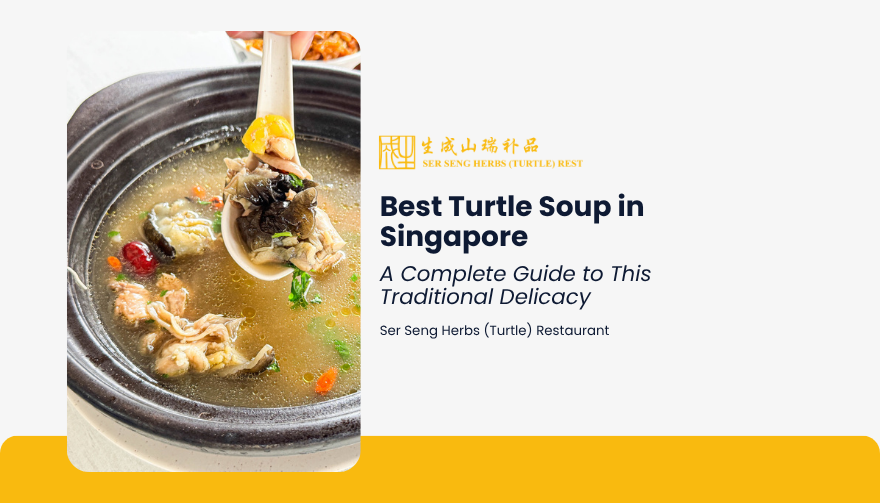
Turtle soup is a traditional Singaporean delicacy known for its rich broth, tender meat, aromatic Chinese herbs and distinctive mouthfeel. But what makes a bowl of turtle soup worth trying?
The answer lies in how the ingredients are selected and prepared. From the depth of the broth to the way different cuts feel in the mouth, several elements shape the experience. This guide explores what to expect from turtle soup, including its preparation, flavour profile, nutritional aspects, accompaniments and where to try it in Singapore.
What Makes the Best Turtle Soup in Singapore?
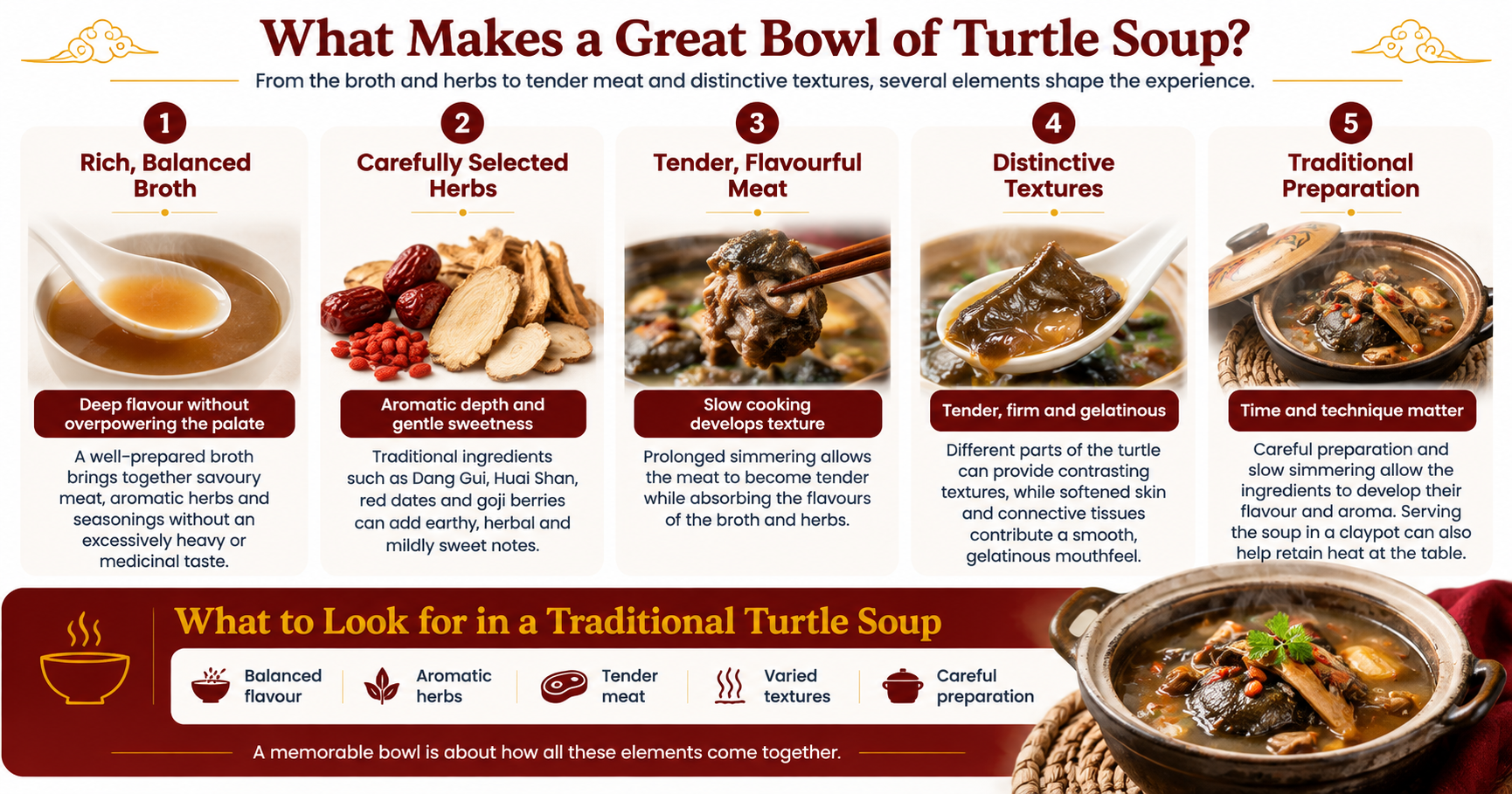
A well-prepared bowl should have a balanced broth, tender meat, well-chosen herbs and careful preparation. Each element should complement the others rather than allowing one characteristic to overpower the rest.
The broth should have depth without being excessively heavy or medicinal. Chinese herbs can add fragrance, warmth and earthy notes while allowing the savoury character of the meat to come through.
Texture is another important part of the experience. Depending on the cut, the meat can range from soft and tender to slightly firmer or chewy. Turtle skin and other connective tissues can also become soft and gelatinous during prolonged simmering, creating a mouthfeel that makes the dish distinctive.
What Ingredients Are Used in Traditional Turtle Soup?
Traditional turtle soup combines turtle meat, Chinese herbs, and seasonings in a carefully prepared broth. The combination gives the finished dish its characteristic aroma, savoury depth and range of textures.
Common ingredients may include:
- Turtle meat: Provides protein and a rich, meaty character.
- Turtle skin and connective tissues: Contain collagen, which breaks down into gelatin during prolonged simmering and contributes to a fuller consistency.
- Chinese herbs: Add earthy, aromatic and mildly sweet notes.
- Seasonings: Help balance the different elements and bring out the meat’s natural character.
Which Chinese Herbs Are Commonly Used?
The herbs used in traditional preparations vary by establishment, but some versions may include Dang Gui, Huai Shan, red dates and goji berries.
- Dang Gui: Contributes an earthy, aromatic note.
- Huai Shan: Has a mild character that blends easily with other ingredients.
- Red dates: Add gentle sweetness.
- Goji berries: Provide subtle fruity notes.
The aim is to create a balanced herbal soup rather than one dominated by strong medicinal flavours.
How Is Traditional Turtle Soup Prepared?
Traditional preparation requires time and careful handling. The ingredients are cleaned and prepared before being slowly simmered with selected Chinese herbs and seasonings.
As the broth develops, the different components release their flavours and aromas. Firmer portions become more tender, while collagen-rich connective tissues soften and contribute gelatin.
Some establishments serve the finished dish in a claypot. This helps retain heat at the table and allows diners to experience the aroma and varied textures while the dish remains warm.
What Does Authentic Turtle Soup Taste Like?
Authentic turtle soup generally has a rich, flavourful and aromatic profile, with earthy notes from the herbs and a deeper character from the broth.
It may be less gamey than a first-time diner expects. The final taste depends on the preparation method, seasoning and balance of the ingredients.
Different portions also create variety. Tender pieces provide a softer bite, while other parts can be firmer or slightly chewy. The softened turtle skin and connective tissues offer a more gelatinous mouthfeel.
For someone trying an herbal turtle soup for the first time, this combination of aroma and contrasting textures can make for a delicious and distinctive experience.
How Is Turtle Soup Different from Other Chinese Soups?
Turtle soup differs from many other Chinese soups mainly because it uses different parts of the turtle, including meat, skin and connective tissues, which create a distinctive combination of tender and gelatinous textures.
Like black chicken soup, it combines meat with aromatic herbs and relies on slow simmering to develop depth. However, the inclusion of skin and connective tissue gives this dish a fuller, more gelatinous mouthfeel than many other herbal soups.
The taste can also be distinctive. The savoury character of the meat is combined with earthy, aromatic notes from the condiments, creating a richer profile than that of some lighter Chinese soups.
While Singapore is famous for its diverse food culture, this delicacy is less commonly encountered than many familiar Chinese-style soups. For diners who want to try something more unusual, it offers a chance to experience a relatively rare food tradition.
What Are the Health Benefits and Nutritional Value?
The nutritional value depends on the recipe, portion size and ingredients used. Turtle meat provides protein, while collagen-rich parts contribute gelatin when slowly simmered.
The dish may also provide minerals such as calcium, phosphorus and zinc, although the amounts vary depending on the recipe and preparation.
In traditional Chinese medicine, practitioners have historically associated turtle-based foods with vitality and wellness. Treat these as traditional beliefs rather than established medical claims, and avoid using them as evidence that the dish can prevent or treat illness.
As with any food, you should consider its nutritional contribution as part of your overall diet and the other foods you consume.
What Should You Eat with Turtle Soup?
Yam rice is a natural accompaniment because its soft consistency works well with the rich stock. Its mild sweetness also provides contrast without competing with the stronger herbal notes.
Plain rice is another straightforward choice for diners who prefer a neutral accompaniment.
When sharing a meal with family or friends, adding vegetables or another soup can make it heartier. Pepper Tripe Soup or Black Chicken Soup, for example, provides a different combination of aroma and mouthfeel while keeping the meal balanced.
Experience Turtle Soup at Ser Seng Herbs (Turtle) Restaurant in Singapore
If you would like to try the dish for yourself, Ser Seng Herbs (Turtle) Restaurant in Tai Thong Crescent near MacPherson offers a chance to experience this traditional Singaporean delicacy.
The restaurant specialises in turtle soup, combining a slow-simmered broth with aromatic Chinese herbs and different cuts of meat. First-time diners can check the menu and location before visiting, and consider pairing their meal with yam rice or another side.
For those curious about a relatively rare part of Singapore’s food tradition, a visit to a specialist restaurant provides an opportunity to experience its distinctive taste and texture firsthand.
Whether you are trying it for the first time or returning to a favourite dish, experiencing it at the restaurant can be a simple way to appreciate the preparation, ingredients and contrasting textures discussed throughout this guide.
Frequently Asked Questions
Disclaimer: This post is intended for general informational and educational purposes only. It does not provide medical advice or establish that turtle soup can prevent, treat or cure any health condition. Nutritional content can vary depending on the recipe, preparation method and portion size.

Other Entries
Health Benefits of Eating Turtle Soup
Since the dawn of Chinese cooking, turtle soups have been perceived as a luxurious delicacy that contains Read More
Unique Fitness Food That Will Turn You into a Health Buff
Would you consider yourself as a health buff? Or are you working your way towards becoming one? Keeping Read More
How Exactly Does a Turtle Soup Taste?
Everyone has their favourite dishes. It can be a savoury plate of fried chicken, or a serving of steamed Read More
