
What Does Claypot Turtle Soup Taste Like? Understanding Its Flavour Profile
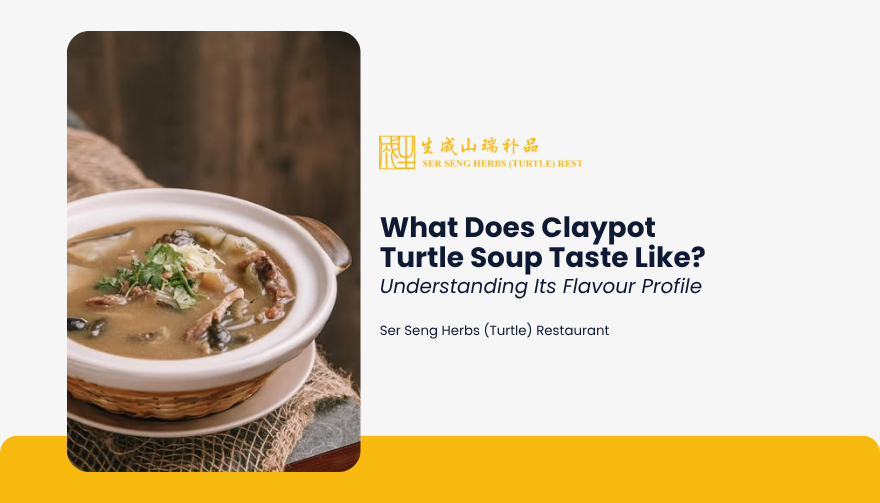
Claypot turtle soup is one of Singapore’s most distinctive traditional delicacies, known for its aromatic soup, tender turtle meat and slow-cooked preparation. While generations of local diners have grown up enjoying this beloved dish, first-time diners are often curious about claypot turtle soup’s flavour profile and what makes it different from other herbal soups.
Is the meat gamey? Does the soup have a strong herbal taste? What kind of texture should you expect from your first bowl of turtle soup?
The answer may be more approachable than expected. From its savoury broth to the different textures of the soft-shelled turtle, every part of the dish contributes to a unique culinary experience.
What Does Claypot Turtle Soup Taste Like?
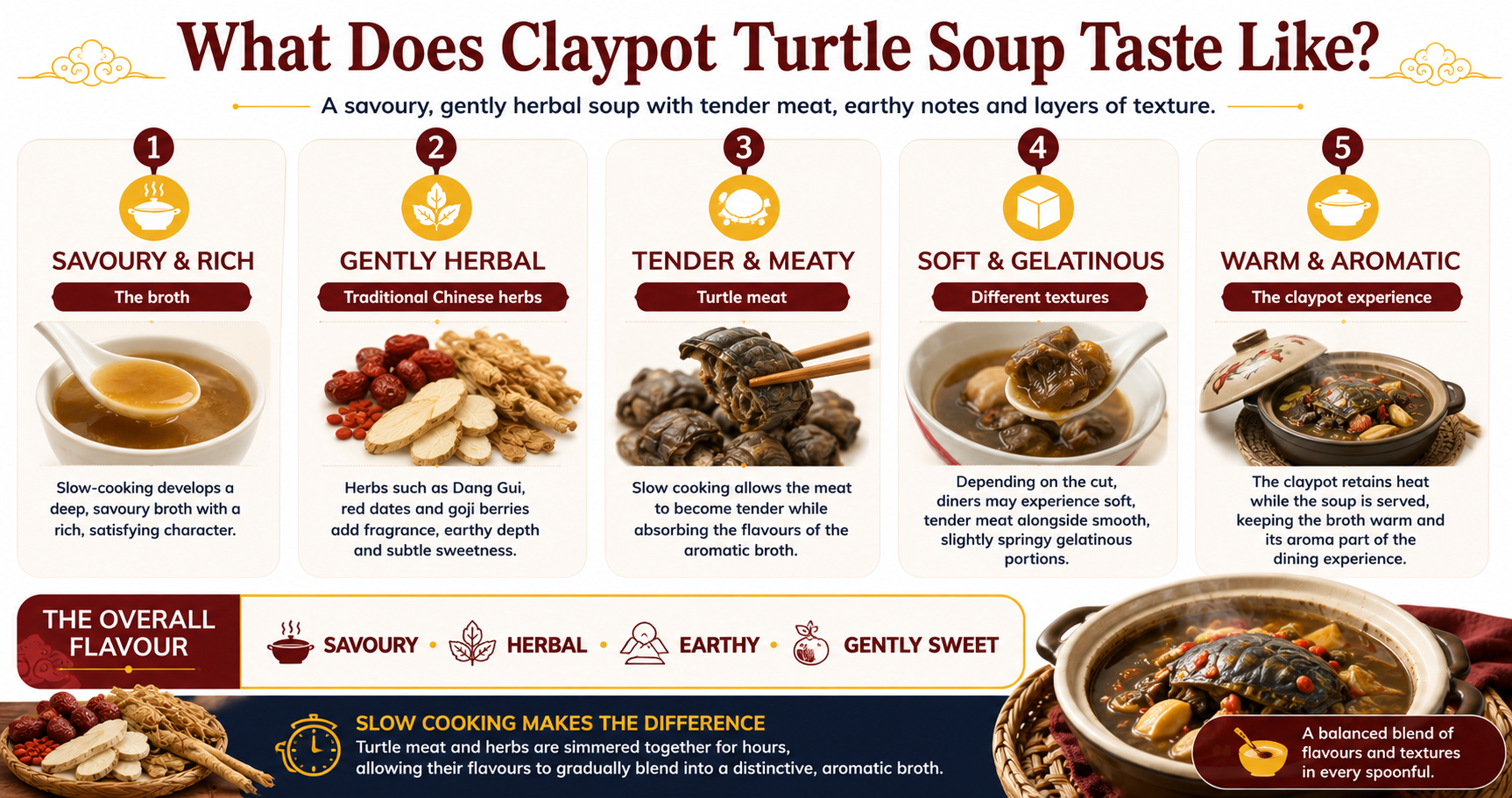
Claypot turtle soup has a savoury, gently herbal flavour with subtle earthy and sweet notes.
The broth has plenty of depth without being overpowering, allowing the turtle meat’s natural flavour to complement the herbs and spices.
Much of this character comes from the slow-cooked preparation. As the turtle meat and herbs simmer together, their flavours gradually develop and blend into the savoury soup. The result is a harmonious combination of savoury richness and aromatic taste.
For first-time diners, the flavour is often less unusual than they might imagine. Rather than tasting intensely gamey, the meat absorbs the essence of the herbal ingredients during cooking. This creates a hearty and flavourful dish with layers of flavour in every spoonful.
What Creates Its Distinctive Flavour Profile?
The distinctive flavour of claypot turtle soup comes from the balance between turtle meat, Chinese herbs and the slow-cooking process. Each element contributes something different without overpowering the others.
Turtle meat provides the savoury foundation, while traditional Chinese herbs add aroma, gentle sweetness and earthy depth. Ingredients such as Dang Gui, red dates and goji berries are often found in herbal soups, while the exact combination of Chinese herbs may vary according to each establishment’s recipe.
A carefully selected blend of high-quality herbs can create unique flavours without masking the meat’s natural character. Rather than competing with one another, the ingredients work together to build depth of flavour. Gentle sweetness balances the savoury notes, while the herbal ingredients contribute warmth and fragrance.
The cooking method also shapes the final profile. Slow cooking gives the ingredients time to release their essence into the broth, while the claypot helps retain heat throughout the meal.
This balance between turtle meat and herbs is an important part of the dish. When prepared well, neither element dominates. Instead, they complement one another to create a satisfying dish that appeals to the taste buds without relying on an excessively strong medicinal flavour.
What Texture Can You Expect from Traditional Claypot Soup?
The exact texture varies depending on the cut. The dish offers a combination of tender meat, gelatinous pieces and a smooth, rich broth.
Turtle meat can range from soft and tender to slightly firmer and more fibrous. After hours of cooking, the meat takes on the rich flavours of the broth while maintaining its own character. Some pieces are succulent and meaty, while others offer a softer texture.
The gelatinous portions of the soft-shelled turtle provide another contrast. Smooth and slightly springy, they add variety to the bowl and contribute to the distinctive mouthfeel associated with the dish.
The broth itself has a smooth and satisfying body. Natural collagen released during cooking contributes to its silky texture and richness, giving the collagen-rich soup depth without making it excessively heavy or thick.
Together, the tender turtle meat, gelatinous pieces and aromatic broth make every spoonful slightly different.
Why Does Turtle Soup Hold a Special Place in Singaporean Cuisine?
Turtle soup holds a special place in Singaporean cuisine because it combines culinary heritage, traditional preparation, and flavours enjoyed across generations. The dish has remained popular among locals for decades, even as the country’s bustling food scene continues to evolve.
Part of its appeal lies in the craftsmanship required to prepare it. Traditional recipes often depend on a careful balance of turtle meat, quality herbs and sufficient cooking time. For longstanding establishments, maintaining consistency also means preserving techniques and recipes passed down through generations.
There is also a sense of familiarity surrounding this traditional delicacy. For some Singaporean diners, turtle soup is a dish they first enjoyed with parents or grandparents. For others, it is something they are curious to experience for the first time.
This combination of heritage, craftsmanship and distinctive flavour has allowed the delicacy of turtle soup to maintain its place within Singaporean cuisine. While many soup options are available today, traditional Chinese herbal soups continue to attract diners who appreciate their depth, warmth and connection to Chinese cuisine.
Where Can You Enjoy Claypot Turtle Soup in Singapore?
To enjoy a delicious bowl of claypot turtle soup, you can visit Ser Seng Herbs (Turtle) Restaurant, an established restaurant specialising in traditional claypot turtle soup.
Its preparation methods and choice of ingredients help shape the overall dining experience. The restaurant combines soft-shelled turtle with a blend of traditional Chinese herbs, creating a savoury broth with gentle herbal depth. Slow cooking also allows the flavours to develop while giving the meat a tender texture.
For first-time diners, an established restaurant can make the experience more approachable. You can take your time to appreciate the aromatic broth, different textures of the turtle meat and the traditional flavours that have made claypot turtle soup a familiar part of Singapore’s food culture.
What Should You Pair with Claypot Turtle Soup?
Claypot turtle soup pairs well with simple dishes such as yam rice or plain rice, which complement the rich broth without overpowering its flavour. These accompaniments can also make the meal more filling and balanced.
Yam rice is a popular pairing. Its subtle sweetness and savoury aroma complement the rich flavours of the broth without competing with its herbal notes. The soft pieces of yam also provide a pleasant contrast to the different textures of the turtle meat.
Plain rice is another simple option for diners who want the soup to remain the centre of attention. Its neutral flavour works particularly well with the hearty broth.
When sharing the meal with family or friends, side dishes can also add variety to the table. The key is balance. Lighter or simply seasoned dishes allow the claypot turtle soup to remain the highlight of the overall culinary experience.
Is Claypot Turtle Soup Suitable for First-Time Diners?
Yes, claypot turtle soup can be approachable for first-time diners, particularly for those who enjoy savoury herbal soups and are open to trying different textures.
Its flavour is often less unusual than its reputation might suggest. The herbal broth is savoury and warming, while the meat offers different textures depending on the cut. The gelatinous portions add another dimension to the dish without dominating the overall experience.
For curious diners, enjoying the soup with familiar accompaniments such as yam rice can make a first visit more approachable.
Like many traditional dishes, claypot turtle soup is best appreciated without rushing. Take time to notice the aroma of the Chinese herbs, the different textures of the meat and the way the broth remains warm in the claypot throughout the meal.
Discover the Flavours of a Traditional Singaporean Delicacy
Claypot turtle soup brings together savoury turtle meat, aromatic Chinese herbs and patient cooking techniques in one distinctive dish.
Its appeal lies in balance. The broth is flavourful without an overpowering herbal taste, while the different cuts of turtle provide a range of tender, firm, and gelatinous textures.
For those looking to experience traditional claypot turtle soup in Singapore, Ser Seng Herbs (Turtle) Restaurant continues to preserve a culinary tradition appreciated across generations.
Whether you are tasting the dish for the first time or returning to a familiar favourite, every steaming claypot offers an opportunity to experience a distinctive part of Singaporean cuisine, one spoonful at a time.
Disclaimer: This content is intended solely for informational and educational purposes. It should not be used as a substitute for professional medical advice, diagnosis or treatment. Nutritional value may vary depending on ingredients, preparation and portion size. Always consult a qualified healthcare provider regarding any medical condition, dietary changes or health concerns.

Other Entries
Health Benefits of Eating Turtle Soup
Since the dawn of Chinese cooking, turtle soups have been perceived as a luxurious delicacy that contains Read More
Unique Fitness Food That Will Turn You into a Health Buff
Would you consider yourself as a health buff? Or are you working your way towards becoming one? Keeping Read More
How Exactly Does a Turtle Soup Taste?
Everyone has their favourite dishes. It can be a savoury plate of fried chicken, or a serving of steamed Read More
